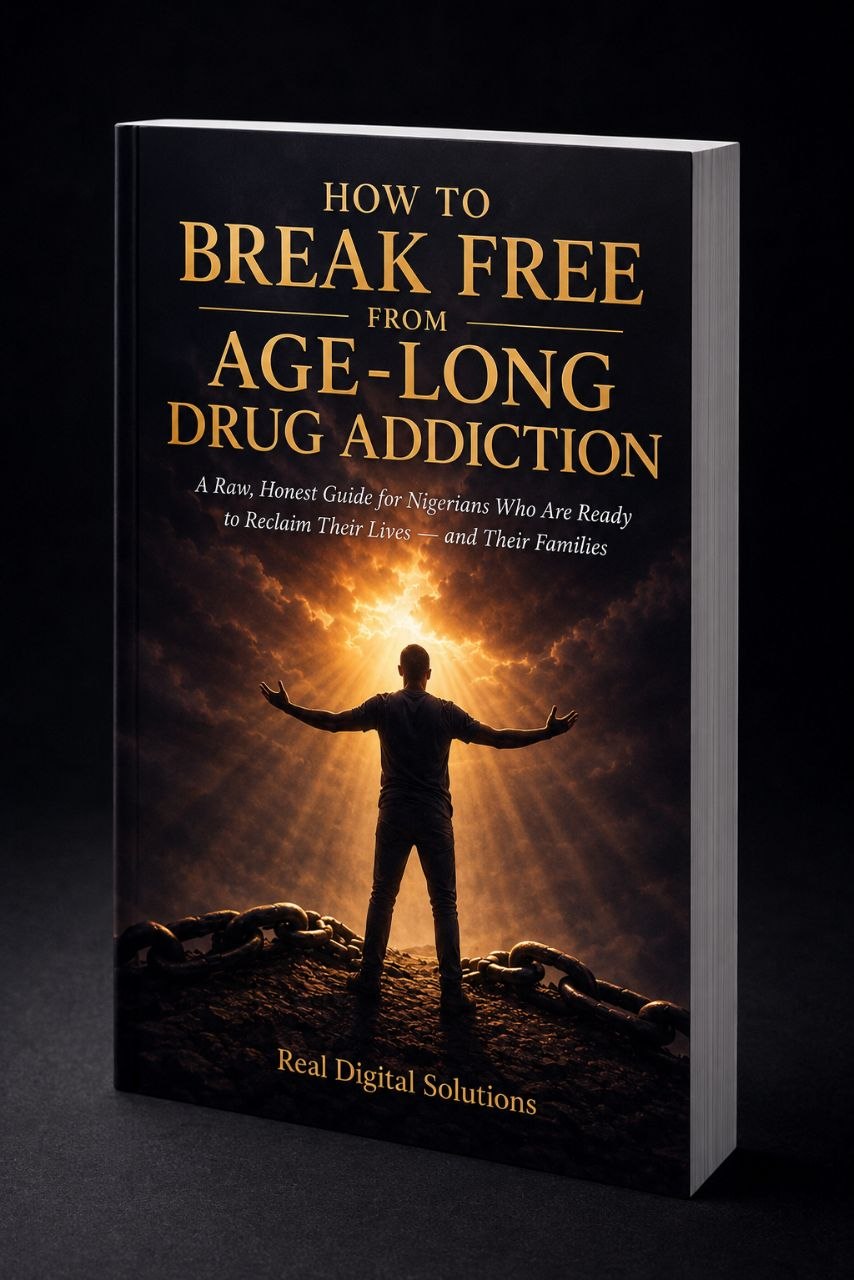
There is a conversation happening in thousands of Nigerian homes right now — in hushed voices, behind closed doors, in the middle of the night. It is the conversation about someone who cannot stop.
Maybe it is your son. Your husband. Your younger sister. Maybe it is you.
And the worst part? Nobody knows what to do. So the family prays harder. The person promises again. Nothing changes. And the shame grows deeper with every passing month.
"In Nigeria, we do not talk about drug addiction. We whisper about it. We call it 'bad company' or 'the devil's work.' We pray over people and send them away with shame instead of solutions."
This guide was written to break that silence. It was written for the mother who has watched her son disappear into himself, for the husband who is tired of lying, for the young man who started with one tramadol and cannot remember the last time he felt normal without it.
Nigerians affected by drug use disorders (UNODC)
Nigerian families touched by substance abuse
Who need treatment in Nigeria receive none
Recovery is possible with the right knowledge
Why Every Other Solution Has Failed
If you or someone you love has been struggling for months — or years — you have probably already tried several things:
- Prayers and deliverance sessions at church
- Herbal concoctions from the market or Instagram herbalist
- The "just stop — be strong" approach
- Chemist-prescribed supplements and sleeping tablets
- Promises made and broken, again and again
- Family interventions that ended in more shame and silence
These approaches failed not because the person is weak or beyond help. They failed because addiction is a neurological condition — it rewires the brain. And a rewired brain does not respond to willpower alone. It needs a protocol.
What This Guide Does Differently
This is not a foreign textbook. It is not a list of clinical terms. It is a raw, personal, step-by-step guide built specifically for the Nigerian experience — our drugs, our culture, our families, our pain, and our resources.
It walks you through a proven personal breakthrough protocol: how one person moved from years of substance dependence to sustained freedom — and how that same journey can be mapped for anyone.
"Recovery is not a straight line. It is not a 30-day programme. It is a journey — messy, nonlinear, deeply personal. And completely worth it."
Who This Guide Was Written For
The Person Struggling
You are tired of living this way. You want to stop but don't know how. This guide gives you the honest roadmap.
The Family Member
You've watched helplessly. This guide teaches you how to help without losing yourself in the process.
The Exhausted Spouse
You love them but you are running out of strength. This guide shows you where your boundaries are.
The Worried Parent
You blame yourself. You shouldn't. This guide helps you understand and act — starting today.
What You Will Find Inside the Guide
Get Your Copy Now
Regular Price: ₦15,000
Price locks in while the timer is running
⏳ Price expires in 07:00The Truth About Withdrawal Nobody Talks About
One reason people relapse within the first week is that nobody prepared them for what withdrawal actually feels like. The sweating. The shaking. The insomnia. The rage. The feeling that you are losing your mind.
Chapter Five of this guide gives you a complete breakdown by substance — tramadol, codeine, cannabis, alcohol, cocaine — with specific timelines, symptoms, and what to do hour by hour. This is the chapter most Nigerian families needed years ago and never had.
For Families: The Chapter That Changes Everything
Chapter Seven is dedicated entirely to family members. It covers the most painful truth in addiction recovery: love alone is not enough. You need tools. You need boundaries. You need to understand the difference between helping and enabling.
Many families who read this chapter say it was the first time they understood why everything they had been doing — out of genuine love — was making things worse.
Frequently Asked Questions
Yes. The stories, resources, drug names (tramadol, codeine, cannabis), cultural context, and help organisations in this guide are all specific to the Nigerian experience. This is not a foreign textbook — it speaks your language.
There is an entire chapter (Chapter 7) dedicated to exactly this situation. It covers how to set loving boundaries, stop enabling, and keep the door open — even when your loved one is not yet ready to walk through it.
After completing payment through Nestuge or Selar, you will receive an instant download link by email. The PDF can be opened on any smartphone, tablet, or computer — no app needed.
The guide is written from a values-based Nigerian perspective and includes a brief prayer. The strategies, information, and resources are practical and relevant for everyone, regardless of religious background.
This guide is a powerful starting point — but it is not a replacement for professional help. It will give you knowledge, tools, and direction. For severe addictions, it strongly recommends and helps you find professional support and community.